
Buying a listed building: what your survey needs to cover
Buying a listed building can be exciting, but it also brings additional responsibilities. A listing protects far more than just the front of a property. It can cover the whole building, inside and out, as well as certain fixtures, attached structures and, in some circumstances, other historic structures within its setting. For a buyer, this means it is important to understand not only the condition of the property, but also how its listed status may affect future repairs, alterations and maintenance. A thorough survey can help you understand the physical condition of the building, identify areas requiring further investigation and highlight alterations or features that may need to be checked further.
Understanding what is listed
Before buying a listed property, it is worth understanding exactly what the listing covers.
In England, listed buildings are recorded on the National Heritage List for England, which provides information about the building and the reasons for its designation.
Grade II buildings make up the majority of listed properties and are recognised as being of special architectural or historic interest. Grade II* and Grade I buildings are rarer and generally subject to greater levels of protection.
It is important to remember that listing does not simply protect the front elevation. Protection can extend throughout the building, including original architectural features, internal details, fireplaces, joinery and other historic elements.
Attached structures and certain older structures within the curtilage may also be protected.
This is one of the reasons why buying a listed property requires a little more investigation than buying a more conventional home.
Alterations and listed building consent
Works that affect the character or special interest of a listed building may require Listed Building Consent.
This can include relatively significant alterations, but it may also apply to changes that might seem straightforward in a conventional property.
For example, alterations to windows, doors, internal layouts, fireplaces, plasterwork or other historic features may require consent.
A survey is not a legal investigation and cannot confirm whether consent has been obtained for previous works. However, where alterations or changes to the building are identified, these can be highlighted so that appropriate enquiries can be made through your solicitor or the local authority.
This is particularly important where original features appear to have been removed or replaced.
It is sensible to establish whether appropriate permissions were obtained before you become legally committed to the purchase.
Traditional construction needs to be understood
Many listed buildings were constructed using materials and methods that are very different from those used in modern homes.
Solid brick or stone walls, lime mortar, lime plaster, timber frames, suspended timber floors and traditional roof coverings all behave differently from modern cavity wall construction.
These buildings were generally designed to manage moisture differently. Materials such as lime mortar and lime plaster allow moisture to evaporate more freely than dense modern cement-based materials.
Over the years, some historic buildings have been altered using materials that are not always compatible with their original construction.
Cement-based pointing or render, impermeable coatings and inappropriate repairs can sometimes trap moisture within traditional walls and contribute to problems such as dampness or deterioration of the building fabric.
This does not mean that every modern alteration is automatically a defect. The important question is whether the materials and repairs are appropriate for the way the building was constructed.
A survey of a historic property should therefore consider the building as a whole and interpret defects in the context of its age, construction and history.
Damp and moisture in older buildings
Dampness in a listed building should not automatically be treated in the same way as dampness in a modern property.
Many older buildings do not have the damp-proof courses, cavity walls or modern construction details found in more recent homes.
Moisture readings alone can therefore be misleading.
The likely cause needs to be considered alongside factors such as external ground levels, drainage, rainwater goods, ventilation, the condition of the masonry and the materials used in previous repairs.
Raised external ground levels, blocked air bricks, defective gutters or inappropriate cement-based finishes can all contribute to moisture problems.
Understanding the cause is more important than simply identifying the presence of moisture.
This is particularly important before expensive damp-proofing treatments or other remedial works are considered.
What a thorough survey will look at
A listed property will often be suitable for a RICS Level 3 Home Survey because of its age, construction and potential complexity.
The inspection is non-invasive and limited to areas that are safely accessible, but it provides a detailed assessment of the visible and accessible parts of the building.
Particular attention may be given to the following areas.
Roof and chimneys
Traditional roof structures can contain original timbers that have performed successfully for many decades or even centuries.
The survey will consider the condition of the roof covering, visible roof structure, chimneys, flashings and associated masonry.
Signs of water ingress, timber deterioration, movement or previous alterations may also be identified.
Walls and signs of movement
Historic properties can display cracks and irregularities that have developed over many years.
The presence of cracking does not necessarily mean that there is an active structural problem.
The important consideration is whether the movement appears historic and stable or whether there are signs that it may be ongoing.
The construction of the building, the location of any cracking and the relationship between different parts of the property will all help inform that assessment.
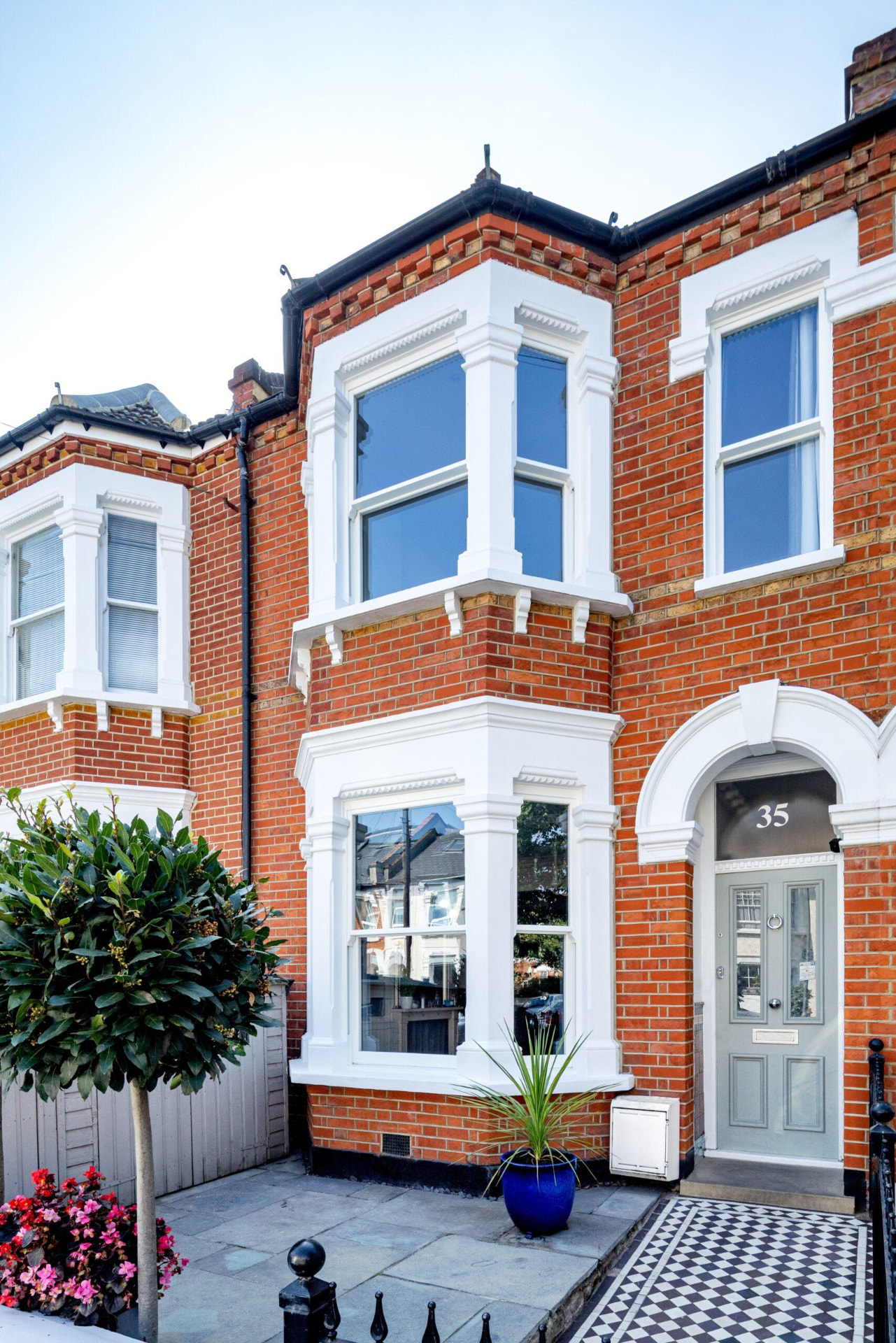
Bay windows, for example, can sometimes have foundations that differ from those supporting the main building and may display movement independently.
Windows, doors and historic features
Original windows, doors, joinery, fireplaces and decorative details can form an important part of a listed building's character.
Their condition should be carefully considered, particularly where repairs or replacement may require specialist skills or materials.
The survey may also identify where original features appear to have been altered or replaced so that further enquiries can be made regarding any necessary permissions.
Floors and internal structure
Older buildings can have uneven, sloping or slightly springy floors.
These characteristics are not automatically evidence of a serious defect.
However, the survey will consider whether there are signs of timber decay, wood-boring insect activity, excessive deflection or structural movement.
Ceilings and internal finishes may also provide useful evidence of the building's condition and history.
Extensions and later alterations
Many listed buildings have been altered over the years.
Extensions, converted roof spaces, removed walls and other changes can all affect the way different parts of the building perform.
The survey will consider how later additions relate to the original structure and whether there are signs of movement, water ingress or other defects where different phases of construction meet.
Where alterations raise questions about permissions or compliance, appropriate further enquiries can be recommended.
Repairs need to be appropriate
Repairing a listed building is not always simply a case of replacing old materials with modern alternatives.
Historic buildings often require repairs using compatible materials and traditional techniques.
For example, lime mortar may be more appropriate than cement mortar, while an original timber window may be capable of repair rather than replacement.
Specialist contractors and traditional materials can sometimes increase the cost of repairs, which is worth understanding before committing to the purchase.
A detailed survey can help identify the most significant issues and explain the likely type of repair that may be required.
Where necessary, further specialist advice may be recommended before work is undertaken.
Budgeting for a listed property
The cost of maintaining a listed building can sometimes be higher than maintaining a more conventional property.
Repairs may require specialist contractors, traditional materials or additional permissions.
Roof coverings, windows, timber frames, lime plaster and historic masonry can all require more specialised knowledge when repairs are needed.
It is therefore important to understand not only what requires attention, but also the likely nature and extent of the work involved.
Where appropriate, further investigation by a specialist contractor or conservation professional may be recommended so that costs can be established before you commit to the purchase.
Insurance is another consideration.
A listed property may require specialist insurance that takes account of the potential cost of rebuilding or repairing the property using appropriate traditional materials and methods.
A listed building deserves a considered survey
A listed property can be a wonderful home, full of character, history and craftsmanship that cannot easily be replicated.
The aim of a survey is not to make an old building appear more problematic simply because it is old.
It is to understand how it was built, how it has changed over time and whether there are defects or alterations that require further attention.
For many listed or historically significant properties, a RICS Level 3 Home Survey will provide the most appropriate level of detail.
The survey should help you understand the building you are buying, the repairs it may need and the areas where further investigation or specialist advice would be sensible.
Talk it through with Lee.
If any of this raises a question about a property you are buying, a short conversation usually brings clarity.